
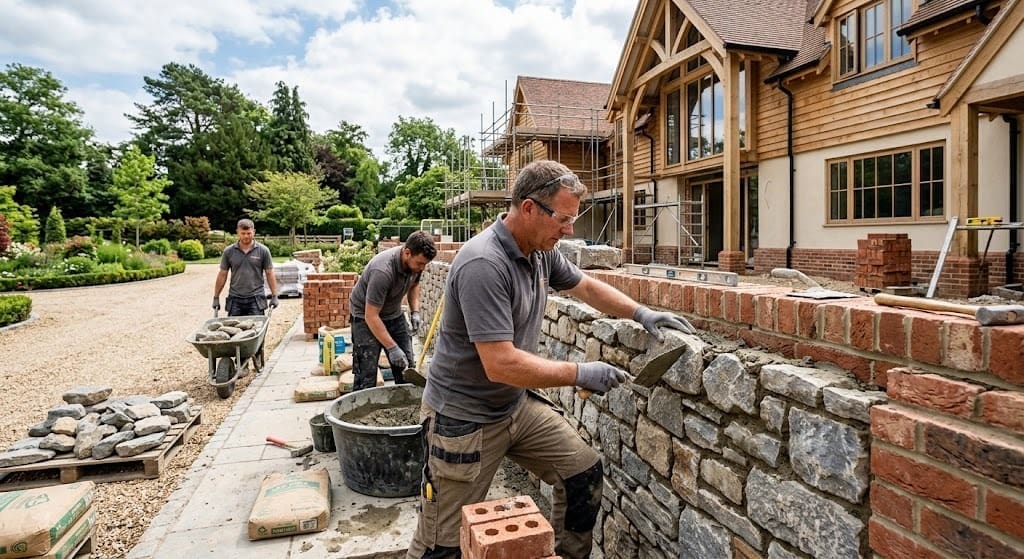
Choosing a masonry contractor in Center Moriches isn’t just about finding someone who can lay brick or pour a patio slab. It’s about finding a team that understands the local soil, the coastal climate, and the kind of construction quality that keeps a project looking good — and standing strong — for decades. With so many contractors advertising similar services, homeowners often struggle to tell who’s actually equipped to do the job right.
This guide walks through what separates a great masonry contractor from an average one, the questions worth asking before you sign a contract, and what homeowners in Center Moriches should look for when comparing options.
Why the Right Masonry Contractor Matters More Than the Price Tag
Masonry is permanent — or at least, it’s supposed to be. A patio, retaining wall, or stone veneer isn’t something you replace every few years like a coat of paint. That’s exactly why the contractor you choose matters more here than in almost any other home improvement category.
The problem is that a lot of masonry work looks fine on day one regardless of who built it. It’s what happens underneath — the base preparation, drainage planning, and structural integrity — that determines whether a project lasts twenty years or starts cracking after two winters. A contractor who understands this will talk about what’s happening below the finished surface, not just what it will look like when it’s done.
For homeowners near the water in Center Moriches, this matters even more. Salt air, fluctuating water tables, and freeze-thaw cycles put extra stress on masonry work, which means the margin for error in construction quality is smaller here than it is inland.
What to Look for in a Center Moriches Masonry Contractor
When comparing contractors, a few key markers tend to separate the ones worth hiring from the ones worth avoiding:
Experience with coastal and Long Island conditions. A contractor who’s worked extensively in the Center Moriches area will already understand the drainage and soil challenges specific to properties near the bay, rather than learning on your project.
A portfolio that shows range. Look for a body of work that spans patios, retaining walls, walkways, veneer, and outdoor living spaces — not just one type of project. Range is often a sign of deeper technical knowledge.
Transparency about process, not just results. The best contractors are willing to explain how they prepare a base, manage drainage, and select materials — not just show you finished photos. If a contractor can’t clearly explain their process, that’s worth noting.
Proper licensing and insurance. This is non-negotiable. A licensed, insured contractor protects you from liability if something goes wrong during construction, and it’s a basic indicator of legitimacy.
Realistic timelines and written estimates. Vague verbal quotes and rushed timelines are common red flags. A trustworthy contractor puts the scope, materials, and cost in writing before work begins.
You can get a sense of what a full-service, transparent masonry operation looks like by reviewing the masonry contractor services page, which outlines the range of hardscape and masonry work available to Long Island homeowners.
Questions to Ask Before Hiring
A short conversation can tell you a lot about how a contractor operates. Consider asking:
- How do you prepare the base for a patio or walkway on sandy or high-water-table soil?
- What drainage measures do you include as standard, and which are optional add-ons?
- Can I see examples of completed projects in Center Moriches or nearby towns?
- What’s included in your written estimate, and what could cause the price to change?
- What warranty or guarantee do you offer on workmanship?
Contractors who answer these questions clearly and specifically — rather than deflecting to generic reassurances — are usually the ones who’ve done the work long enough to know exactly what goes wrong when it’s done poorly.
What Sets an Established Masonry Contractor Apart
There’s a meaningful difference between a contractor who focuses purely on the finished look of a project and one who treats the unseen construction quality as the real product. The visible stonework, pavers, or brickwork are what a homeowner sees and enjoys every day — but the compaction, drainage, and structural work underneath are what determine whether that investment holds up.
This is the standard worth measuring any contractor against: not just “does the finished project look good in photos,” but “was it built in a way that will still look good — and function properly — a decade from now.” Homeowners who ask about process, not just aesthetics, tend to end up with contractors who build for the long term.
You can find a fuller explanation of what this standard looks like in practice on the best masonry contractor page, which breaks down the qualities Center Moriches homeowners should prioritize when comparing local options.
Red Flags Worth Watching For
Just as there are markers of a strong contractor, there are warning signs that should give homeowners pause. Be cautious of contractors who ask for full payment upfront before any work begins, who can’t provide references or examples of past projects in the area, or who pressure you to sign a contract on the spot without giving you time to compare options.
Vague estimates are another common red flag — if a quote doesn’t break down materials, labor, and scope of work in reasonable detail, it leaves too much room for costs to shift once the project is underway. Similarly, a contractor who dismisses questions about drainage, base preparation, or soil conditions as unnecessary details is often someone who cuts corners in exactly those areas.
Word of mouth and online reviews can help here, but they’re not the whole picture. A contractor with glowing reviews for small repair jobs isn’t necessarily equipped for a large-scale patio or retaining wall project. It’s worth looking specifically for feedback on projects similar in scale and complexity to your own.
The Value of Local Knowledge
There’s a real advantage to hiring a contractor who’s spent years working specifically in and around Center Moriches, rather than one who occasionally takes jobs in the area. Local knowledge means understanding which neighborhoods tend to have higher water tables, which streets see more salt exposure from nearby waterways, and how local permitting processes typically unfold with the Town of Brookhaven.
This kind of familiarity isn’t something a contractor can fake convincingly in a sales pitch — it shows up in the specificity of their answers when you ask about your particular property and street. A contractor who can speak knowledgeably about conditions just a few blocks from your home is far more likely to anticipate problems before they happen, rather than discovering them mid-project.
Making the Final Decision
Once you’ve narrowed your list down to a couple of contractors, trust your instincts as much as the paperwork. Did they take the time to walk your property and explain their reasoning? Did their estimate feel thorough, or rushed? Were they upfront about potential complications, like drainage issues or soil conditions, rather than glossing over them?
A contractor who’s confident enough to explain the harder parts of the job — not just sell you on the easy parts — is usually the one who’ll deliver a project that holds up under real conditions.
If you’re comparing options in Center Moriches and want to see examples of completed work or talk through a project in detail, you can explore past projects on the Legacy Brick and Stone homepage or get in touch directly through the contact page to schedule a consultation.
Final Thoughts
The best masonry contractor for your home isn’t necessarily the one with the lowest bid or the flashiest portfolio photos — it’s the one who treats the unseen construction quality with the same seriousness as the finished look. For Center Moriches homeowners dealing with sandy soil, coastal exposure, and seasonal freeze-thaw cycles, that distinction matters more than almost anywhere else on Long Island. Take the time to ask the right questions, review real examples of local work, and choose a contractor who’s willing to explain exactly how they build — not just what the result will look like.